
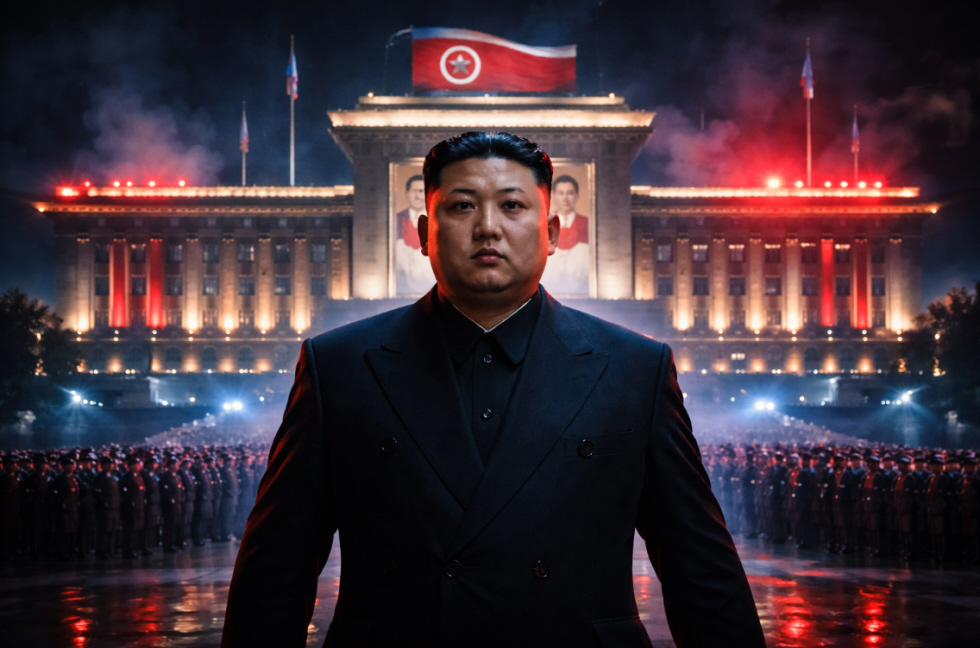
North Korean leader Kim Jong Un has been re-elected as general secretary of the ruling Workers’ Party, reaffirming his control over the country’s political structure. The decision was finalized during a rare high-level party gathering held this week in Pyongyang. Although the move represents continuity rather than a shift in power, state media portrayed the reappointment as a historic milestone. The regime’s largest newspaper devoted extensive praise to Kim’s leadership following the announcement.
According to official messaging, Kim has delivered what were described as “unimaginable achievements” over the past five years. The narrative credits him with strengthening the country politically, militarily, and economically despite mounting external pressure. The political meeting that confirmed his re-election was considered unusual by outside observers, as such large-scale party assemblies are not frequent in North Korea’s tightly controlled system.
These gatherings typically serve to reinforce strategic priorities and consolidate authority. Under Kim’s leadership, North Korea has continued advancing its weapons programs, particularly in nuclear and ballistic missile capabilities. These developments have sustained regional tensions, especially with South Korea, Japan, and the United States. At the same time, the country faces ongoing economic challenges linked to international sanctions and internal structural constraints. Despite these pressures, state narratives emphasize resilience and self-reliance under Kim’s direction.
Domestic media coverage reflects the regime’s longstanding approach to political communication, placing strong emphasis on loyalty and centralized leadership. The tone surrounding the re-election underscores stability and continuity at the top. Diplomatically, the development does not signal immediate policy shifts. Relations with Western governments remain strained, while Pyongyang continues to project an image of strategic independence.
For international analysts, the re-election appears largely symbolic, reinforcing an already entrenched power structure. Kim maintains consolidated authority within both the party and the state apparatus. By formalizing his position once again, North Korea’s leadership sends a message of internal unity and political continuity. The move reinforces the perception of centralized control in one of the world’s most closed political systems.


