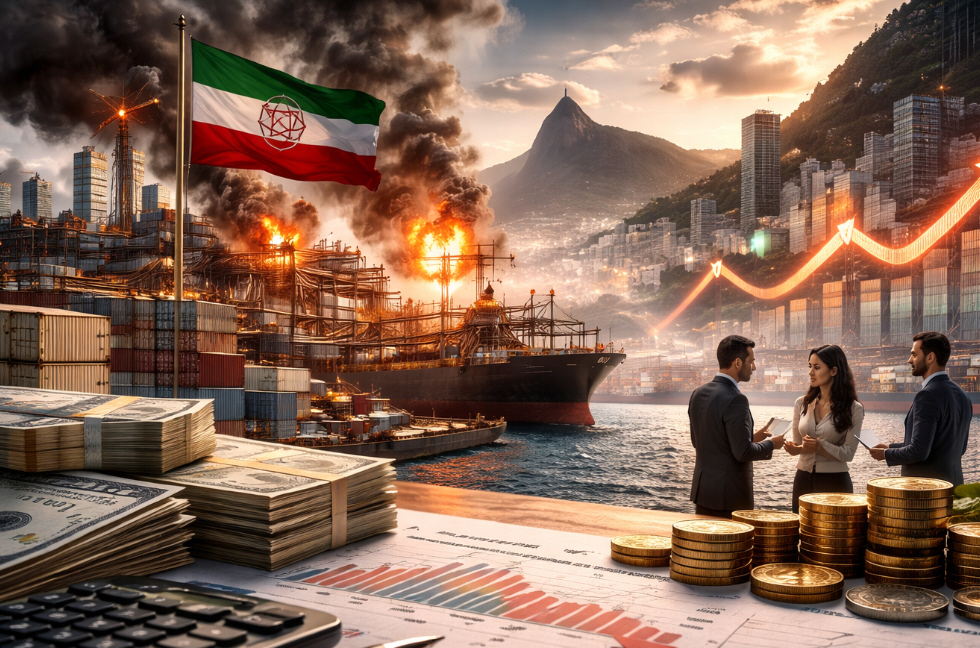
The war in Iran has begun to produce effects that extend far beyond the Middle East, reaching several economies in Latin America. Although the region is geographically distant from the battlefield, the economic consequences of a conflict of this scale are quickly felt across global markets. One of the first impacts can be seen in the price of oil, which tends to rise whenever tensions increase in a region that plays a crucial role in global energy production.
Higher oil prices may benefit some Latin American oil-exporting nations, but they also raise energy costs for countries that depend heavily on imports. Rising energy prices also affect transportation and production costs. When fuel becomes more expensive, industries such as agriculture, manufacturing, and logistics face higher operating expenses, which can eventually translate into higher prices for consumers. Financial markets across Latin America also respond to global uncertainty.
During periods of geopolitical tension, investors often move their capital toward safer assets, which can cause fluctuations in regional currencies and volatility in stock markets. Economic authorities throughout the region are closely monitoring developments. Central banks and finance ministries are analyzing how the international situation may influence inflation, economic growth, and financial stability. International trade may also be affected if the conflict disrupts shipping routes or global supply chains.
Latin American economies rely heavily on trade with other parts of the world, making them vulnerable to delays and increased transportation costs. Some commodity-producing countries in the region could experience temporary gains if global prices for certain resources increase due to uncertainty. However, these benefits are often unstable and depend largely on how long the conflict lasts.
Industrial sectors that rely on imported components are also watching the situation carefully. When global markets become volatile, businesses face greater challenges in planning investments and maintaining operational stability. Economic analysts note that Latin America has gained experience navigating complex global environments in recent years, but geopolitical crises remain one of the most unpredictable external factors affecting the region.
As the conflict in Iran continues to unfold, governments and financial markets in Latin America remain alert to international developments. The trajectory of the war will likely determine whether the economic effects remain manageable or evolve into a broader challenge for the region.