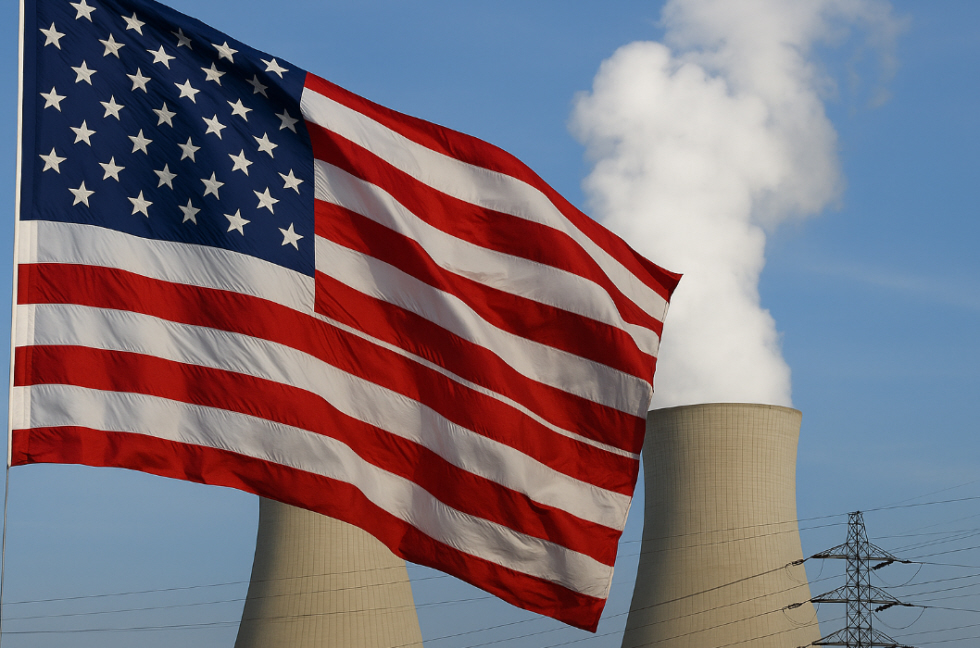
The United States government has announced an investment of up to 800 million dollars to support the development of small modular nuclear reactors (SMRs), a technology that could reshape the country’s energy production landscape in the coming decade. According to the Department of Energy, both the state-owned Tennessee Valley Authority (TVA) and the private company Holtec will receive up to 400 million dollars each to advance the design and construction of their proposed reactors.
The initiative comes at a moment when U.S. electricity demand is rising for the first time in twenty years, driven by the rapid expansion of artificial intelligence operations, cryptocurrency mining, and the growing adoption of electric vehicles across the nation. TVA plans to use its share of the funding to continue developing GE Vernova Hitachi’s BWRX-300 reactor, which is slated for installation at the Clinch River site in Tennessee. Holtec, meanwhile, intends to build two modular reactors at its Palisades facility in Michigan, a project that has drawn attention from nuclear energy advocates.
Supporters argue that SMRs will reduce costs because they are manufactured in factories and later transported to operational sites. However, no small modular reactor is currently under construction in the United States, and uncertainty remains over whether they can deliver electricity as affordably as today’s large-scale reactors. Added to this challenge is the long-standing issue of nuclear energy: its production of long-lived radioactive waste, for which the country still lacks a permanent disposal facility. The Department of Energy expects SMR technology to be ready for deployment by the early 2030s, marking a potential turning point in America’s energy strategy.
“This funding ensures that we can deploy these reactors as quickly as possible,” said Energy Secretary Chris Wright, emphasizing that accelerated technological development will be crucial to avoid future electricity shortages. If the projects progress as anticipated, the United States could become one of the first nations to adopt this new generation of compact reactors, a strategic move that combines energy innovation with industrial competitiveness at a moment of profound transformation within the global power sector.

