
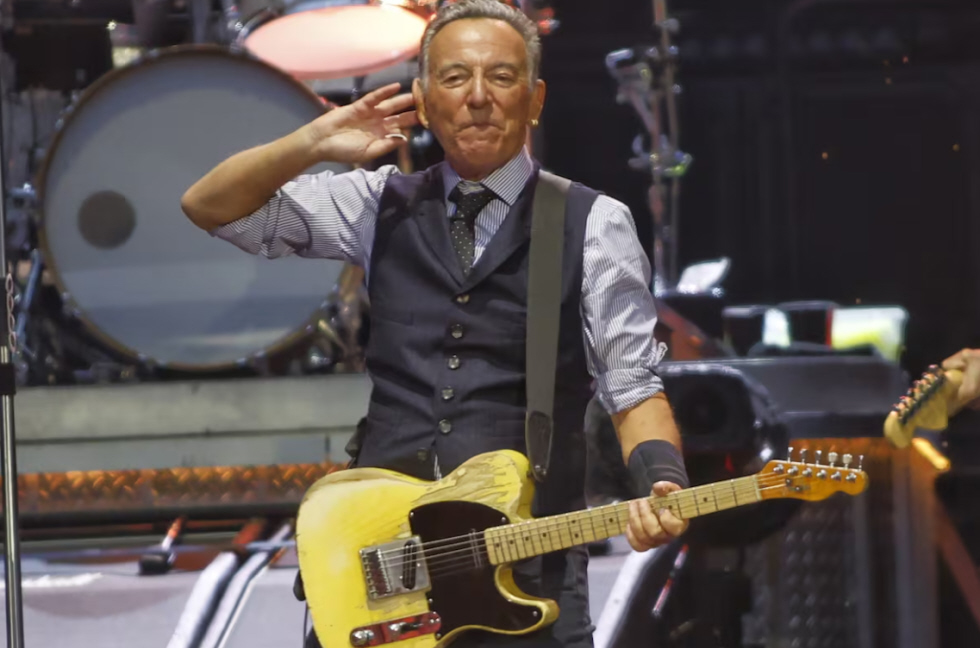
Bruce Springsteen released a new song on Tuesday titled “Streets of Minneapolis”, a powerful and uncompromising piece that places the American musician once again at the center of social and political debate. The track emerges as a direct response to recent incidents of violence in Minneapolis during federal immigration operations, events that have shaken the city and reignited a nationwide discussion about the use of force and immigration policy.
The song was written, recorded, and released within a matter of days, reflecting the urgency with which Springsteen felt compelled to respond. Rather than following a traditional commercial rollout, “Streets of Minneapolis” arrives almost spontaneously, driven by outrage and a sense of responsibility to speak out when silence feels unacceptable. In its lyrics, Springsteen paints stark images of militarized streets, constant sirens, and communities living under sustained tension.
The narrative focuses on the human cost of enforcement actions and the grief left behind by deaths that occurred during those operations, transforming the song into a raw urban chronicle centered on loss, fear, and resilience. Musically, the track adopts a restrained rock-folk structure, allowing the message to take precedence over production. Springsteen’s voice is steady and unembellished, closer to a public statement than a conventional performance. The repeated chorus reinforces the song’s protest nature and underscores its call for accountability.
The title deliberately echoes “Streets of Philadelphia”, one of the most iconic songs of Springsteen’s career, though the context and tone are notably different. While that earlier work explored illness, isolation, and dignity, “Streets of Minneapolis” confronts state power, institutional violence, and the social fractures exposed by aggressive enforcement policies. Throughout his career, Springsteen has used music as a lens to examine social conflict and challenge authority, and this release fits squarely within that tradition. The song is neither abstract nor symbolic; it is a clear and direct stance that embraces the risk of controversy in favor of moral clarity.
Public reaction was swift. Within hours of its release, the track spread rapidly across digital platforms and social media, drawing praise from supporters who view Springsteen as a consistent and principled voice, while also provoking criticism from those who argue that artists should remain detached from political issues. Regardless of the controversy, “Streets of Minneapolis” reaffirms that, even at this stage of his life and career, Bruce Springsteen continues to see music as a form of testimony and resistance.
The song does not seek easy consensus or resolution, but instead captures a tense moment in contemporary America and reinforces the idea that, for some artists, taking a stand is inseparable from their art.


