
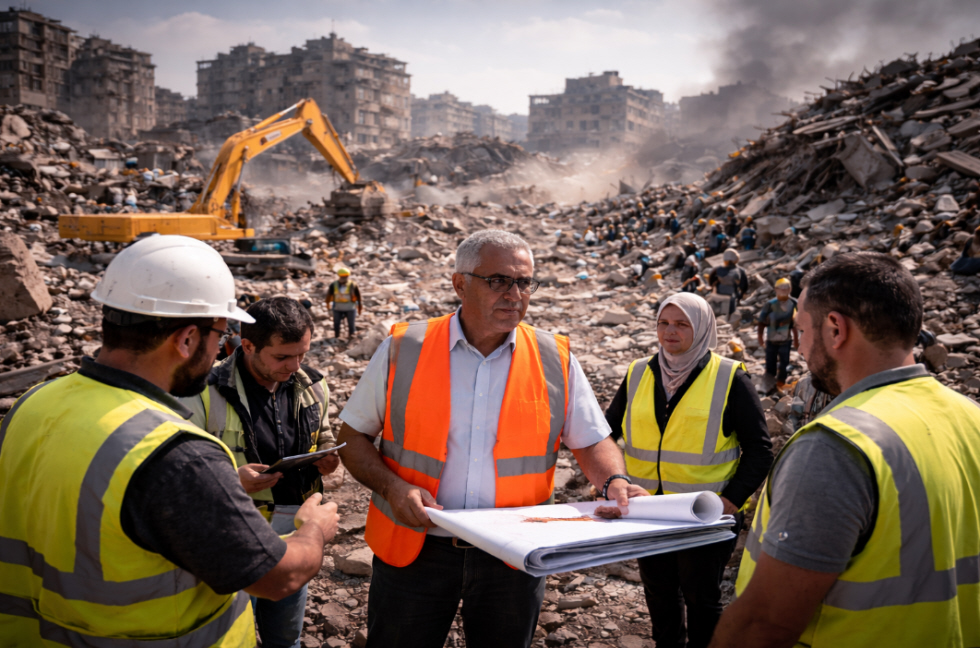
The Gaza Strip has now received a transitional administration composed of 13 Palestinian technocrats and one independent technocrat, tasked with managing the humanitarian emergency and laying the groundwork for the enclave’s future reconstruction. Ali Shaath, former deputy minister of planning of the Palestinian Authority, was appointed to lead the committee and presented an initial framework to address the extensive devastation caused by the conflict.
Shaath, a civil engineer by training, explained that the immediate challenge is dealing with an estimated 68 million tons of rubble. Among the preliminary ideas discussed is the use of heavy machinery to remove debris from destroyed buildings and potentially repurpose it to create new coastal land, freeing urban areas for future rebuilding efforts. According to the new administrator, basic infrastructure in Gaza could be restored within three years, although he emphasized that the top priority at this stage remains emergency aid, particularly shelter for displaced civilians.
Only after that phase would efforts move toward restoring vital services such as water, electricity, and sanitation, followed by the reconstruction of housing. Shaath stated that, under favorable conditions, Gaza could be “better than before” within seven years. This assessment, however, contrasts sharply with projections from the United Nations, which estimates that full reconstruction could extend until at least 2040, given the scale of destruction, political complexity, and ongoing access and funding constraints.
The committee’s area of responsibility will initially cover zones previously controlled by Hamas and will expand gradually as the Israeli military continues its withdrawal, Shaath said. So far, Israeli forces have pulled back from nearly half of the Gaza Strip, while the remaining areas remain under the control of various armed groups. The issue of Hamas disarmament remains one of the most significant obstacles. International mediators continue to press for progress on this front, viewing it as essential for long-term stability. Despite this, Hamas has expressed initial support for the new transitional administration, while stressing the need for international backing.
“The ball is now in the hands of the mediators, the U.S. guarantor, and the international community to empower the committee,” said Bassem Naim, a Hamas representative, signaling conditional political support for the new governing structure. The establishment of the transitional administration is part of the second phase of a U.S.-backed, phased peace plan agreed upon in October by Israel and Hamas. The plan includes a ceasefire, the exchange of hostages for Palestinian prisoners, and increased humanitarian aid. However, the process has repeatedly faced setbacks, including military actions and delays in opening border crossings, leaving Gaza’s immediate future uncertain.


