
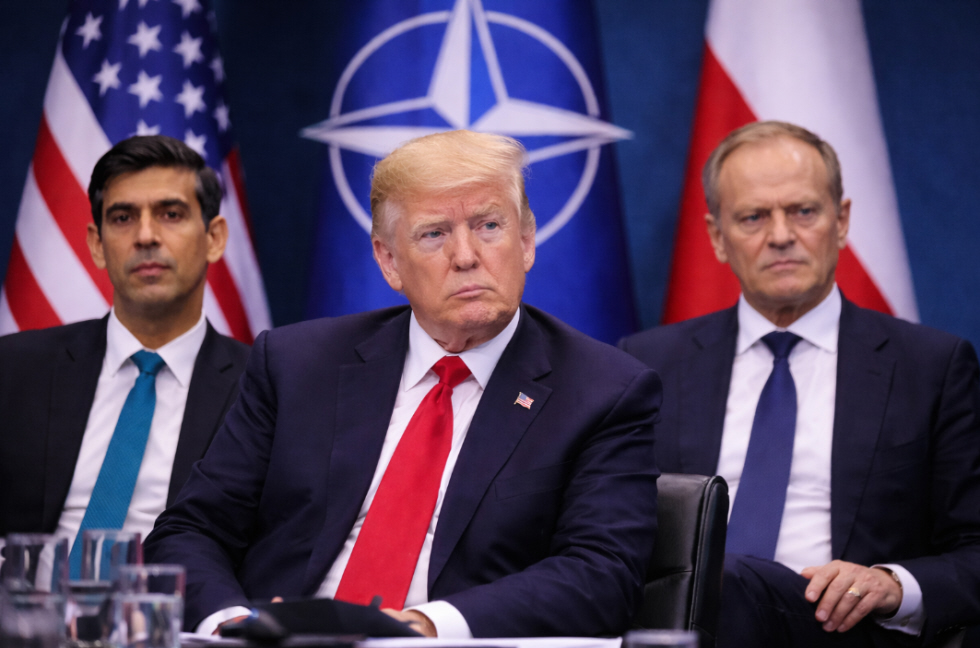
Recent remarks by the U.S. president regarding the role of NATO troops in Afghanistan have sparked strong reactions among long-standing allies within the transatlantic alliance. In a televised interview, the president argued that the United States never truly needed NATO support and suggested that allied forces deployed after the September 11, 2001 attacks were not positioned on the main front lines.
The comments prompted immediate criticism from several countries that played active roles in the Afghanistan mission. British Prime Minister Keir Starmer described the remarks as offensive and deeply hurtful to the families of soldiers who were killed or wounded during the conflict. He stated that, had he made similar comments, he would have issued a public apology. The debate quickly extended beyond political circles to families of veterans. The mother of a British soldier publicly expressed her outrage, saying the remarks were extremely difficult to endure for those who had borne the personal cost of years of military service abroad.
British government officials echoed the view that the contribution of allied troops had been unfairly minimized. Officials from the United Kingdom’s Ministry of Defence emphasized that NATO’s Article 5 — the principle of collective defense — has been invoked only once in the alliance’s history, following the September 11 attacks. As a result, allies such as the United Kingdom responded to the call from the United States, with more than 450 British soldiers losing their lives in Afghanistan.
Reactions also emerged from other European nations. In Poland, government officials and military figures recalled that Polish troops took part in missions in both Afghanistan and Iraq, with dozens of soldiers killed while fulfilling international commitments alongside NATO allies. Polish military representatives stressed that their forces were not limited to secondary roles.
They highlighted that troops operated in high-risk areas and that both combat personnel and medical and logistical units played essential roles in sustaining operations on the ground. Despite political differences, the responses converged on a central point: the importance of preserving a respectful memory of those who served under NATO command.
For many allied governments, the issue goes beyond specific statements and centers on acknowledging the shared sacrifices made during one of the longest conflicts of the modern era. The episode has once again underscored the sensitivities surrounding historical interpretation within the Atlantic alliance. As discussions continue, allied leaders and societies alike stress that the legacy of soldiers who served in Afghanistan must be approached with care, respect, and a strong sense of historical responsibility.


