
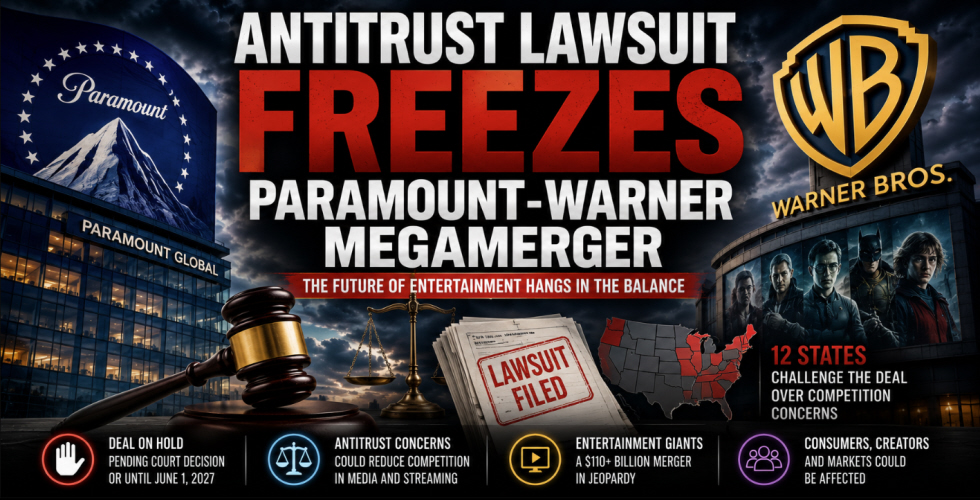
The proposed acquisition of Warner Bros. by Paramount has been temporarily suspended after an antitrust lawsuit was filed by twelve U.S. states. The legal challenge represents a significant obstacle to one of the most ambitious corporate transactions in the entertainment industry and leaves the future of the deal uncertain. The lawsuit seeks to determine whether the merger would substantially reduce competition across film production, television broadcasting, and digital streaming markets.
Regulators argue that a transaction of this scale deserves a thorough review before receiving final approval. Under the court's current schedule, the acquisition will remain on hold until a judicial ruling is issued or, at the latest, until June 1, 2027. This timeline provides both sides the opportunity to present their arguments while regulators assess the broader impact on consumers and competing businesses. The proposed merger between Paramount and Warner Bros. has been viewed as one of the most transformative deals in the modern entertainment industry.
Combining their studios, television networks, film franchises, and streaming platforms would create a global media powerhouse with enormous market influence. Supporters of the transaction argue that the entertainment business is undergoing rapid transformation driven by streaming services and growing international competition. They believe the merger would strengthen investment capacity, expand content production, and improve the companies' ability to compete with other major technology and media corporations. Critics, however, warn that such a massive consolidation could reduce consumer choice, weaken competition, and place independent producers at a disadvantage.
They also argue that greater market concentration could eventually lead to higher prices, fewer creative opportunities, and less diversity in available content. The legal uncertainty is also affecting the strategic planning of both companies. Several investment projects, corporate restructuring efforts, and international expansion plans may remain on hold while the courts determine whether the proposed merger complies with U.S. antitrust laws. Investors will closely monitor every stage of the legal proceedings, as the outcome could have significant implications for company valuations and the future direction of the entertainment industry.
Although the initial market reaction has been relatively moderate, the final decision could reshape long-term expectations. Beyond the outcome of this specific case, the lawsuit reflects increasing regulatory scrutiny of large corporate mergers in strategic sectors of the economy. Authorities are seeking to balance business growth and innovation with the need to preserve open, competitive markets that benefit consumers.
The court's final decision will not only determine the future of this proposed megamerger but may also establish an important precedent for future consolidation efforts across the global entertainment industry. Companies, investors, and governments alike will be watching closely as the case unfolds and its broader consequences become clear.

