
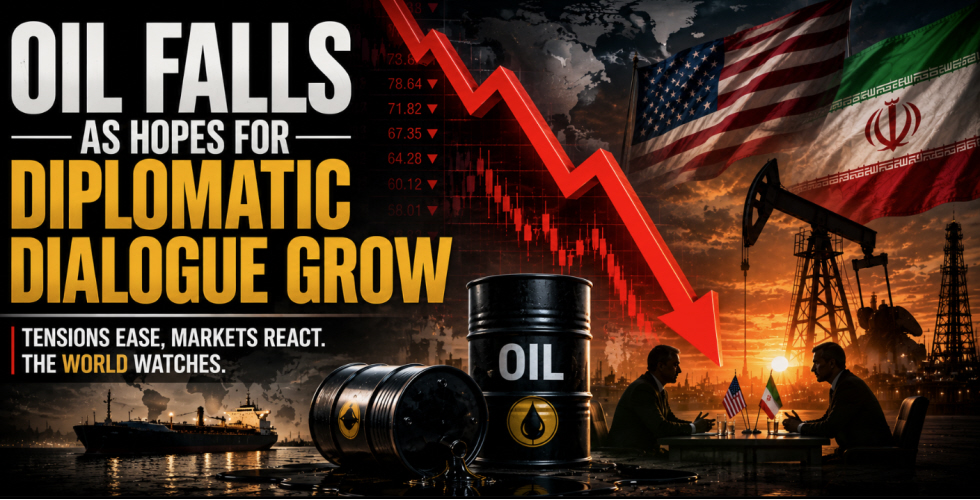
Oil prices opened the week with a sharp decline, reflecting a noticeable shift in investor sentiment across global energy markets. The absence of new military strikes between the United States and Iran temporarily eased fears of a broader regional conflict. As a result, traders responded quickly, driving crude prices lower during the first trading sessions in Asia. The decline was largely driven by growing expectations that diplomatic efforts could regain momentum after several days without direct military confrontation. Investors interpreted the temporary calm as a possible opportunity for renewed dialogue between Washington and Tehran.
That optimism reduced some of the geopolitical risk that had recently supported higher oil prices. Crude oil markets remain highly sensitive to developments in the Middle East, one of the world's most important energy-producing regions. Any indication of conflict has the potential to disrupt production or transportation routes, while signs of de-escalation often trigger immediate price corrections as concerns over supply begin to fade. Financial markets also reacted positively to reports suggesting that diplomatic communication channels remained open despite ongoing political differences.
Although major disagreements continue to exist between both governments, the possibility of future negotiations encouraged a more optimistic outlook among investors monitoring global energy markets. Lower oil prices offered temporary relief to industries heavily dependent on fuel costs. Airlines, transportation companies, manufacturers, and logistics firms welcomed the decline, as reduced energy expenses could improve profitability and ease inflationary pressures in several sectors of the global economy. Despite the positive market reaction, analysts continue to urge caution because the underlying geopolitical situation remains unresolved.
The Middle East continues to be one of the world's most strategically sensitive regions, where unexpected developments can rapidly reverse market trends and restore volatility to commodity prices. Oil-producing nations are also closely monitoring the evolving situation. A prolonged decline in crude prices could affect government revenues in countries that rely heavily on energy exports, while importing nations may benefit from lower fuel costs if the downward trend continues over an extended period.
Energy companies now face a constantly changing environment in which investment decisions, production planning, and exploration strategies must adapt quickly to market fluctuations. Managing uncertainty has once again become one of the industry's highest priorities as geopolitical events continue shaping investor confidence. Global financial markets will continue watching every political signal coming from Washington and Tehran.
Diplomatic decisions and regional security developments are expected to play a decisive role in determining future movements in crude oil prices and the broader economic outlook for international markets. The latest decline demonstrates how rapidly energy markets respond to changes in geopolitical risk. While the current period of relative calm has encouraged optimism, lasting stability will ultimately depend on meaningful diplomatic progress capable of reducing tensions and providing greater certainty for the global economy.