
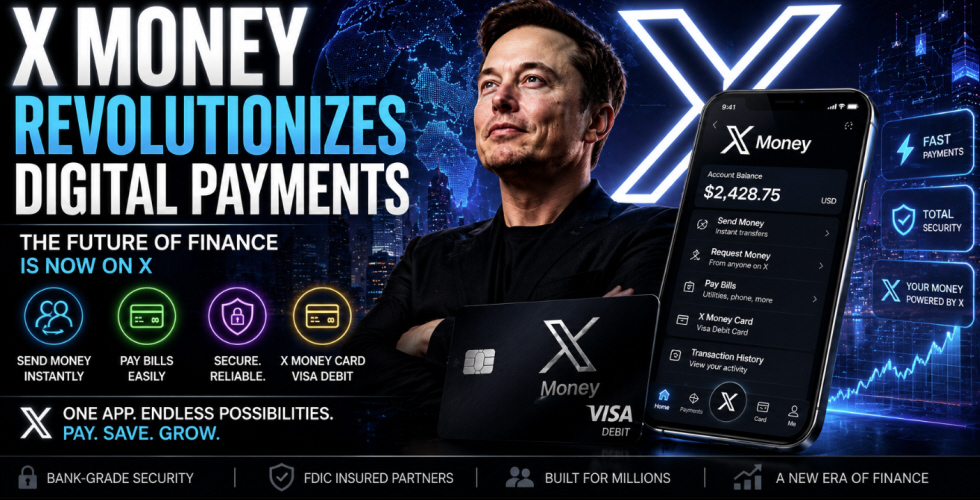
X has entered a new stage of its evolution with the launch of X Money in the United States, introducing an integrated platform for digital payments and financial services. The initiative represents one of Elon Musk's most ambitious projects since acquiring the former Twitter platform. The long-term vision is to transform X into a place where users can communicate, consume content, shop, and manage their finances without leaving the application. During its initial rollout, X Money is available to users in the United States who subscribe to the Premium or Premium+ membership plans.
This limited release allows the company to evaluate system performance, strengthen security measures, and gather user feedback before expanding access. The gradual approach is designed to ensure stability as financial services become available to a broader audience. The platform allows users to send money directly to one another within X, eliminating the need to switch between multiple applications to complete financial transactions. This integration combines social interaction with digital commerce, creating a seamless experience where communication and payments coexist inside the same ecosystem.
The concept reflects Elon Musk's long-standing vision of combining technology and finance into a unified platform. Rather than operating as an independent bank, X Money functions as a financial technology service supported by licensed banking institutions in the United States. Partner financial organizations handle transaction processing, fund custody, and regulatory compliance while providing the infrastructure necessary to support secure financial operations. This model allows X to expand into financial services while relying on established banking expertise. The service is expected to include features such as peer-to-peer transfers, digital accounts, bill payments, and debit card functionality linked to users' available balances.
These capabilities position X Money as a direct competitor to established payment platforms including Venmo, Cash App, and PayPal. Its greatest advantage is the enormous global user base that already interacts daily on the platform. The launch represents another important step toward Elon Musk's vision of transforming X into an all-in-one digital application. Similar to multifunctional platforms popular in parts of Asia, the goal is to create an environment where users can communicate, make purchases, manage finances, and access services without relying on separate applications. X Money becomes one of the first major building blocks of that strategy. The expansion into financial services also introduces significant responsibilities related to cybersecurity, privacy protection, and consumer confidence.
The platform must demonstrate that it can effectively safeguard personal information, prevent fraud, and protect users' financial assets. Building trust will be essential as X seeks to establish itself within one of the world's most heavily regulated industries. Regulatory agencies in the United States are expected to closely monitor the development of X Money and its compliance with financial regulations. Payment services must meet strict standards involving identity verification, anti-money laundering controls, transaction monitoring, and consumer protection.
Successfully navigating these requirements will be critical to the platform's long-term growth. For X, financial services may become an important new source of revenue beyond advertising and subscription memberships. Digital payments, commercial tools, and future financial products could strengthen the company's business model while attracting creators, merchants, and businesses seeking integrated payment solutions.
This expansion has the potential to reshape how commercial activity takes place within social media platforms. The introduction of X Money marks a significant transformation in the identity of X and the broader strategy led by Elon Musk.
The company is no longer positioning itself solely as a social media platform but as a technology ecosystem that combines communication, commerce, and finance. Its long-term success will depend on security, ease of use, public trust, and its ability to compete effectively in the rapidly evolving digital payments industry.