
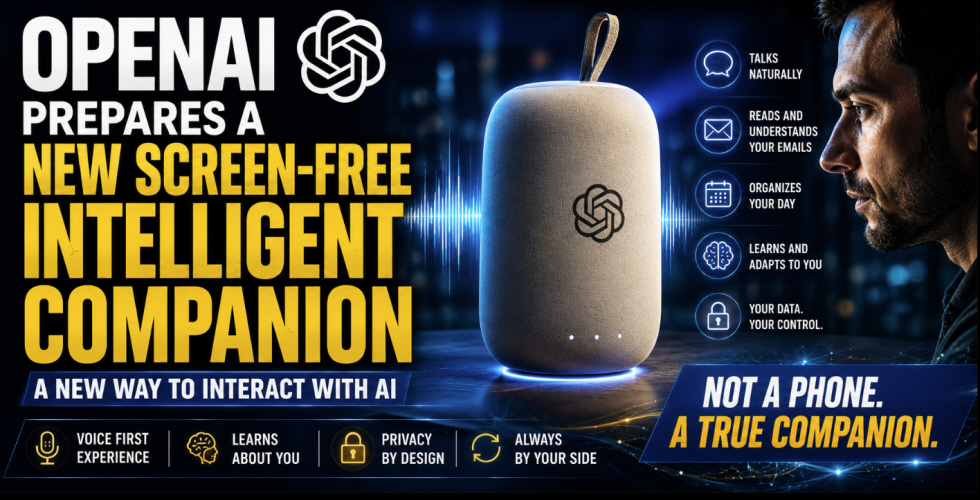
OpenAI is moving forward with the development of an innovative artificial intelligence device that could mark the beginning of a new generation of personal technology. Unlike traditional smartphones, the project is expected to deliver an experience centered entirely on natural interaction between people and artificial intelligence. Early reports suggest the company is not building another smartphone, but rather a portable screen-free device designed to accompany users throughout their daily lives. The concept aims to reduce dependence on displays while emphasizing voice interaction, contextual awareness, and continuous learning.
The project has attracted significant attention across the technology industry because it combines advanced AI capabilities with a completely new hardware approach. If successful, the device could introduce an entirely new category of consumer products built specifically for artificial intelligence. One of its most promising features would be the ability to learn continuously from each user's habits, routines, and preferences. As it gathers experience over time, the assistant could provide increasingly personalized responses and anticipate everyday needs before they arise.
The device is also expected to integrate seamlessly with many of the digital services people already use every day. Emails, calendars, reminders, and personal information could be managed through natural conversations, reducing the need to interact directly with traditional applications. Another major goal of the project is to give the assistant a distinctive personality, making conversations feel more engaging and human. Instead of functioning solely as a search tool, the system is intended to become a trusted companion capable of maintaining meaningful and intuitive interactions. This initiative represents an important shift in OpenAI's long-term strategy.
After focusing primarily on software and language models, the company now appears ready to expand into hardware, creating an ecosystem where artificial intelligence becomes a constant presence in everyday life. At the same time, the concept raises important questions about privacy and personal data protection. A device with continuous access to sensitive information will require strong security measures and transparent privacy controls to earn users' confidence.
Competition in the AI industry is expected to become even more intense as major technology companies continue exploring new ways to integrate artificial intelligence into consumer devices. The race is no longer limited to developing better AI models but also includes designing the ideal hardware experience.
If the project delivers on its ambitious vision, OpenAI could become one of the leading forces behind the next major technological transformation. A screen-free intelligent companion has the potential to redefine how people interact with technology, bringing artificial intelligence closer to becoming a natural part of everyday life.

