
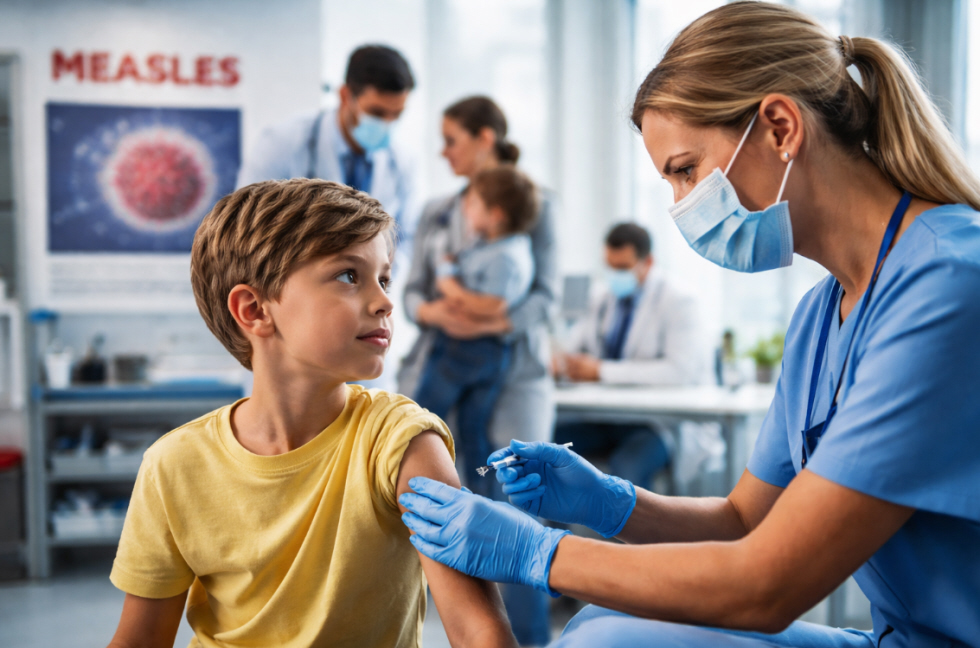
The United States is experiencing a significant resurgence of measles, a disease that had been declared eliminated from the country more than two decades ago. The increase in cases has triggered renewed public health concern across multiple states. Measles is a highly contagious viral disease that spreads through the air when an infected person coughs, sneezes, or even breathes near others. Its transmission rate is so high that brief exposure in enclosed spaces can be enough to spread the virus.
Health authorities have confirmed hundreds of cases so far this year, with active outbreaks reported in several regions. In certain communities, the virus has spread rapidly, prompting intensified epidemiological monitoring. A key factor behind the rise is a decline in vaccination rates within some segments of the population. The measles, mumps, and rubella (MMR) vaccine has proven highly effective, yet not all communities maintain optimal immunization coverage.
Lower vaccination levels can stem from multiple causes, including misinformation, access barriers to healthcare services, and vaccine hesitancy. When community immunity weakens, the virus finds greater opportunity to circulate. International travel has also played a role. Measles remains present in various parts of the world, and imported cases can trigger local outbreaks if they come into contact with unvaccinated individuals.
Although many measles cases resolve without severe complications, the disease should not be underestimated. It can lead to pneumonia, brain inflammation, long-term health damage, and in rare cases, death—particularly among young children and immunocompromised individuals. State health departments have stepped up public awareness campaigns, emphasizing the importance of maintaining up-to-date vaccination schedules.
Contact tracing and temporary isolation measures have been implemented in outbreak areas. Schools and childcare facilities have become focal points of concern, as close contact among children facilitates transmission. In some districts, vaccination requirements for attendance are being reinforced. Public health experts warn that the resurgence of measles highlights how preventable diseases can return when vaccination coverage declines.
The current situation underscores the fragility of long-standing public health achievements. Addressing the outbreak requires coordination between local, state, and federal authorities, along with strong community participation.
Prevention remains the most effective tool to limit further spread. As the country monitors the evolving situation, the immediate priority is containing transmission and restoring strong immunization levels. The measles resurgence represents a public health challenge that demands sustained attention and collective action.

