
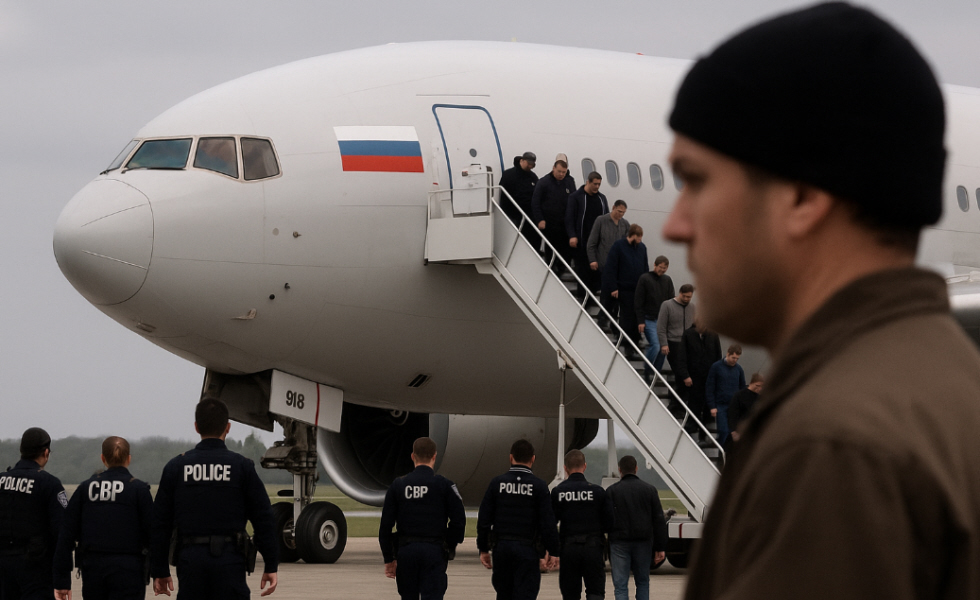
The United States government has intensified its strict immigration policy by deporting dozens of Russian citizens who had sought asylum for political reasons. According to a report, at least two deportation flights operated by U.S. Immigration and Customs Enforcement (ICE) carried more than 80 rejected Russian asylum seekers back to Moscow, with a prior stopover in Egypt.
Among those deported was a Russian soldier wanted for desertion, who was immediately detained upon arrival in Russia. The incident has sparked strong criticism and raised serious concerns about the respect for human rights in the process. Testimonies from deportees describe inhumane conditions in U.S. detention facilities, often compared to internment camps.
“I was afraid I might die,” said one deportee, citing lack of medical care, overcrowding, and insufficient food. Another Russian deported in June recounted the physical toll: “I weighed 93 kilograms before they took me to a detention camp. A month and a half later, I weighed 69 kilograms.” Human rights organizations have condemned the deportations, warning that many of those returned will face political persecution, arbitrary trials, or even torture in Russia.
Washington’s decision reflects a migration policy that, under the current administration, has expanded mass deportations even to nations where there are clear risks of persecution.
Critics argue that this approach violates the international principle of non-refoulement, which prohibits sending refugees back to countries where their life or freedom may be endangered. For those affected, the tragedy is twofold: enduring degrading treatment in U.S. detention and being forcibly returned to a homeland where their safety and lives are gravely threatened.


