
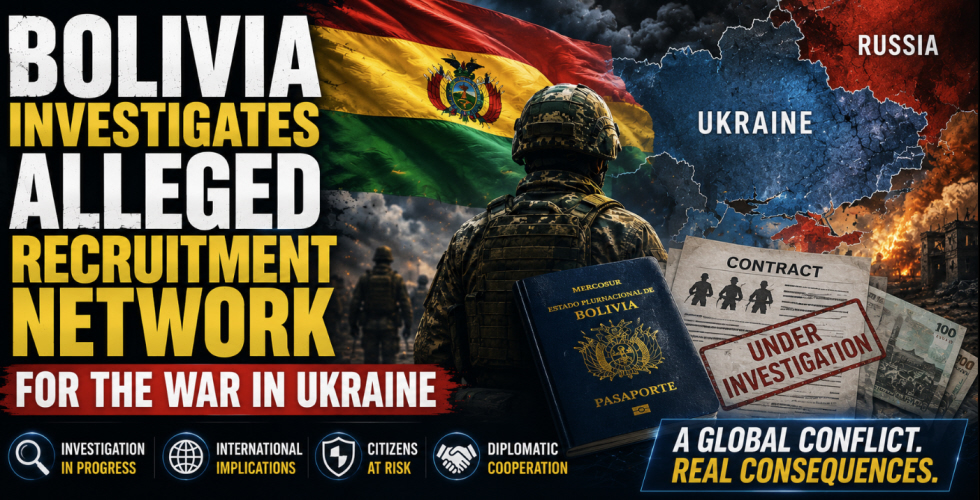
Bolivian authorities have intensified an investigation into an alleged network accused of recruiting citizens to participate in the ongoing war between Russia and Ukraine. The case has attracted growing attention both inside the country and abroad because of its potential legal, diplomatic, and security implications. The controversy gained momentum after Russian Ambassador to Bolivia Dmitry Vérchenko stated that the Russian Embassy has no involvement in any recruitment system targeting Bolivian citizens.
He emphasized that the diplomatic mission has no role in organizing or facilitating participation in the conflict. The ambassador acknowledged that foreign fighters from different parts of the world, including Latin America, have taken part in the war. However, he stressed that such individuals act independently as mercenaries seeking financial compensation and are not recruited through official Russian government channels. Regarding reports that Bolivian citizens may already be connected to the conflict, the ambassador said he had no confirmed information.
He added that any official details regarding military personnel or foreign participants would need to come from the appropriate authorities within Russia's Ministry of Defense. Meanwhile, Bolivian institutions continue gathering information to determine whether individuals or organizations offered contracts, employment opportunities, or financial incentives to encourage citizens to travel abroad and become involved in the conflict. Investigators aim to establish the scope of these activities and identify those responsible. The case has also raised concern among families whose relatives recently traveled overseas under unclear employment offers.
Authorities have urged citizens to exercise caution and carefully verify any international job proposals before accepting them, particularly those connected to high-risk regions. Security specialists believe that modern armed conflicts have created opportunities for transnational recruitment networks that target vulnerable individuals with promises of high salaries or attractive work abroad. Such organizations often exploit economic hardship and limited employment opportunities to attract recruits.
On the diplomatic front, Bolivia remains in communication with the appropriate international authorities while continuing to provide consular assistance whenever necessary. Protecting Bolivian citizens and ensuring a transparent investigation remain central priorities throughout the process. The investigation also highlights how conflicts taking place far from Latin America can still affect citizens across the region.
Globalized communication and international recruitment methods have increased the possibility that foreign wars may draw participants from countries with no direct involvement in the conflict. As the investigation continues, officials insist that all facts must be carefully verified before reaching definitive conclusions. The outcome could provide valuable insight into the participation of Latin American citizens in international conflicts and help strengthen measures aimed at preventing similar recruitment activities in the future.


