
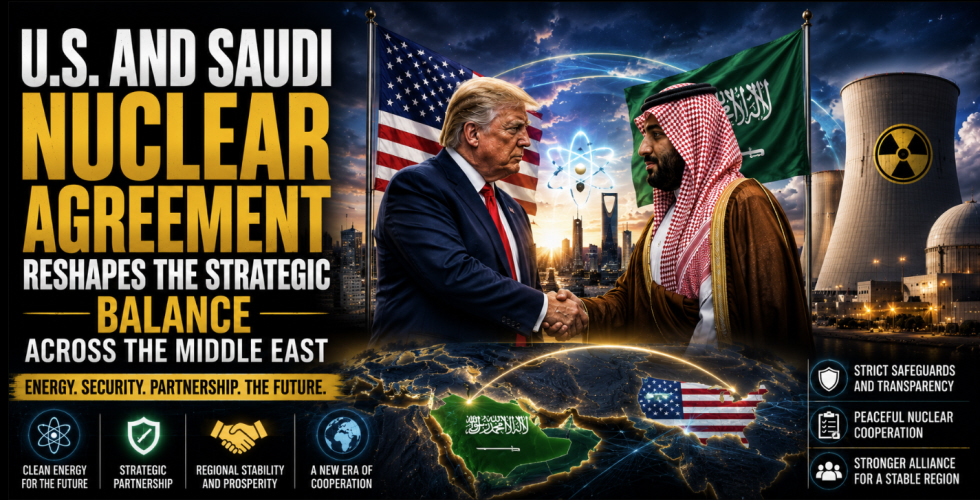
The United States and Saudi Arabia are moving toward a civil nuclear cooperation agreement that could reshape the strategic landscape of the Middle East. The initiative aims to strengthen bilateral relations through energy development while also raising concerns among key regional players. The proposed agreement focuses on technological cooperation to support a nuclear energy program officially intended for electricity generation and Saudi Arabia's long-term economic development.
Washington maintains that the arrangement would include strict oversight measures to ensure the technology is used exclusively for peaceful purposes. However, the potential agreement has generated concern in Israel, where government officials believe any expansion of nuclear capabilities in the region must be approached with extreme caution. Israeli leaders continue to view the preservation of the country's strategic advantage as a top national security priority.
Analysts believe the agreement could alter the balance of power in the Middle East by opening a new phase of cooperation between Washington and Riyadh. Beyond its energy component, the initiative strengthens political and security ties between the two allies during a period of heightened regional tensions. Saudi Arabia's position reflects its long-term strategy to diversify its energy resources and reduce its dependence on oil. The development of nuclear energy is considered a central pillar of the country's economic modernization plans and its vision for future growth.
For the United States, the agreement represents an opportunity to reinforce its influence in a region where global powers continue competing for economic, political, and strategic partnerships. The initiative also supports long-standing alliances viewed as essential to stability in the Persian Gulf. At the same time, governments across the region are closely monitoring the broader security implications of the agreement.
Although the nuclear program is intended for civilian purposes, any expansion of nuclear technology inevitably raises questions about its long-term geopolitical impact. The proposal also plays an important role in ongoing discussions regarding the possible normalization of relations between Saudi Arabia and Israel. Many observers believe future diplomatic progress could be closely connected to broader regional cooperation efforts.
As negotiations continue, the international community emphasizes the importance of maintaining the highest standards of transparency, verification, and international oversight. Strong monitoring mechanisms will be critical to building confidence and preventing additional tensions in an already volatile region.
The future of the agreement will depend on complex political, diplomatic, and security negotiations. What remains clear is that any decision regarding Saudi Arabia's nuclear program will extend far beyond the two countries, influencing the strategic balance of the Middle East for years to come.


