
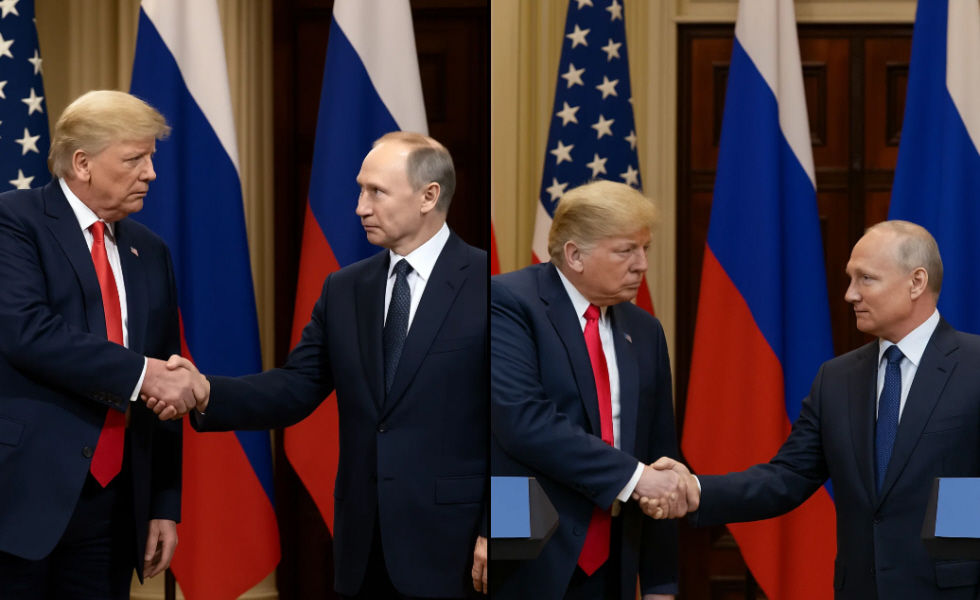
The summit held in Anchorage, Alaska, between former U.S. President Donald Trump and Russian President Vladimir Putin ended without concrete progress toward achieving a ceasefire in the war in Ukraine. Far from easing tensions, the outcome generated a wave of reactions across the international community, reflecting both frustration and urgency to find a solution to a conflict that has lasted more than three years and has left thousands dead and millions displaced.
Ukrainian President Volodymyr Zelenskyy immediately expressed his discontent with the lack of results and stressed that any agreement must include Ukraine directly. “The future of my country cannot be decided without Ukraine at the table,” he declared, while supporting the idea of a tripartite summit involving the United States, Russia, and Ukraine, with European allies accompanying the process. In Europe, the responses were strong and determined.
French President Emmanuel Macron, German Chancellor Olaf Scholz, and British Prime Minister Keir Starmer all emphasized that any negotiation process must guarantee Ukraine’s territorial integrity. Likewise, European Commission President Ursula von der Leyen warned that the European Union will maintain and strengthen sanctions against Moscow as long as the occupation of Ukrainian territories continues.
“Peace cannot be based on forced concessions or on weakening national sovereignty,” she stated. Other international leaders displayed more nuanced positions. Hungarian Prime Minister Viktor Orbán considered the resumption of dialogue between Washington and Moscow to be positive, though he was criticized by European sectors for his closeness to Putin. India adopted a more neutral tone, highlighting the importance of keeping communication channels open and avoiding further escalation, while Latin American countries such as Brazil and Mexico called for an inclusive peace process under the umbrella of the United Nations.
In the United States, political reaction was divided. While Trump described the meeting as “an important step toward a future agreement,” Democratic lawmakers accused him of weakening Ukraine’s position by insisting that Kyiv “needs to make concessions” to achieve peace. Analysts suggest that such rhetoric could have consequences not only for Washington’s foreign policy but also for the presidential campaign.
The lack of results in Alaska underscores the deep differences between the parties and the difficulty of reaching an immediate solution to the conflict. However, global reactions also demonstrate the clear determination of many governments to maintain support for Ukraine and prevent any eventual deal from legitimizing Russia’s occupation. The outcome of this summit, rather than a conclusion, appears to mark the beginning of a new stage of international negotiations under growing diplomatic pressure.


