
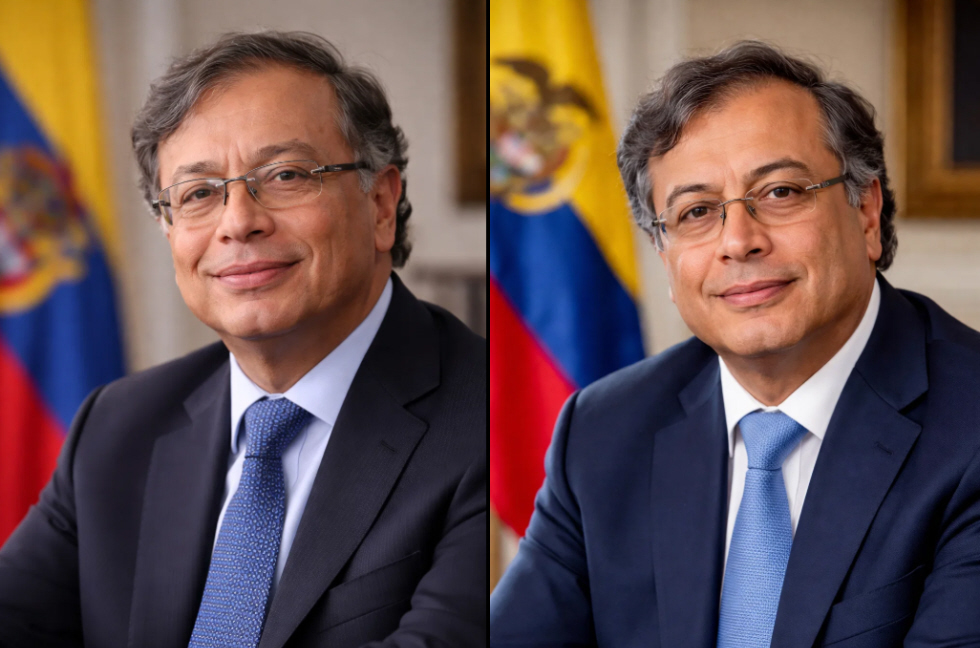
The Colombian president Gustavo Petro is currently facing pressure on multiple fronts at the same time. While he remains openly engaged in a political dispute with U.S. President Donald Trump over trade and migration issues, an old personal video has resurfaced on social media, reigniting public debate and generating strong reactions across Colombia. The footage, which has been recirculated online and referenced by international media, allegedly shows a man believed to be Petro walking hand in hand with transgender journalist Linda Yepes during a trip to Panama.
Although the video is not recent, it has been interpreted by some sectors as suggesting a possible extramarital relationship—an accusation that has resonated strongly in Colombia’s predominantly conservative and Catholic society. So far, Petro has not confirmed that he is the person shown in the video. The president has, however, addressed the controversy by condemning what he described as discriminatory attacks. In a public statement posted on social media, Petro clarified his sexual orientation and rejected transphobic remarks sparked by the video.
“I am heterosexual, but you will never hear a transphobic word from me,” he wrote, without addressing the personal implications of the footage itself. The renewed circulation of the video comes at a particularly sensitive moment in relations between Bogotá and Washington. Days earlier, Donald Trump had threatened to impose 25 percent tariffs on Colombian products after Petro’s government refused to accept the repatriation of migrants aboard U.S. military aircraft. Colombia responded with similar trade measures, marking the first bilateral trade confrontation since Petro took office in 2022. Petro’s wife, Verónica Alcocer, has not commented publicly on the allegations.
Linda Yepes, for her part, confirmed only that she had been in Panama and declined to provide further details. According to media reports, the journalist has received death threats following the video’s circulation, raising concerns about harassment and hostility fueled by online outrage. This episode unfolds amid an already tense political climate. Petro faces growing protests against his reform agenda, judicial investigations involving members of his family circle, and ongoing criticism of his foreign policy positions, including controversial statements on Israel and his historical alignment with leftist leaders in Latin America.
In this context, the personal scandal acts as an additional catalyst, intensifying scrutiny of his leadership style and crisis management. Beyond the video itself, the situation illustrates how personal matters, social media dynamics, and political confrontation can merge and escalate in times of deep polarization. For Petro, the challenge is not only diplomatic or economic, but also narrative: managing a personal controversy while governing amid sustained domestic and international pressure.


