
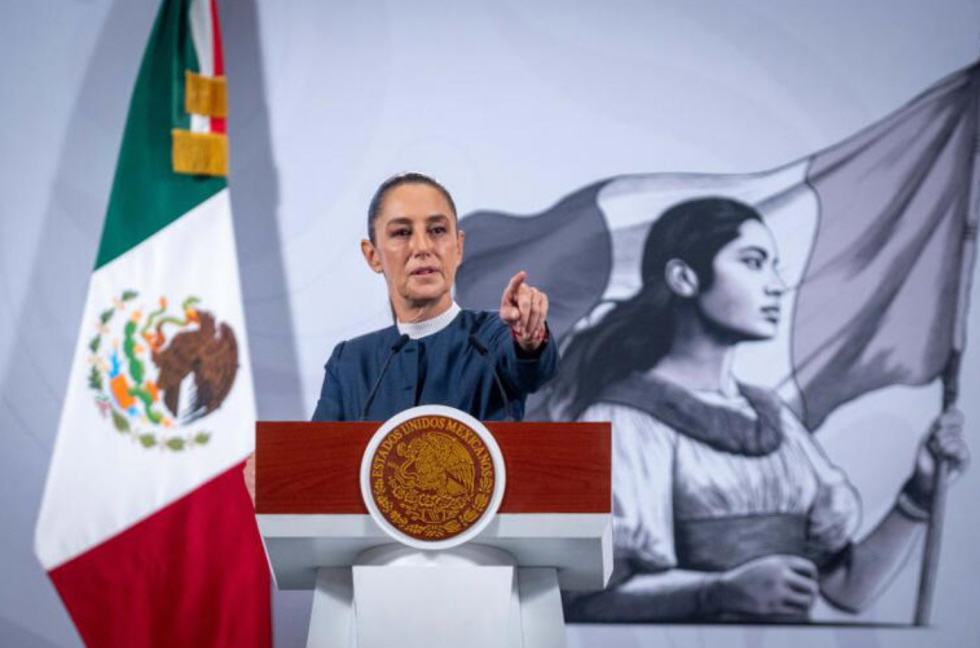
Mexican President Claudia Sheinbaum expressed this week her rejection of what she described as unilateral actions by the United States in Latin America, referring to the recent capture in U.S. territory of Venezuelan leader Nicolás Maduro, who is currently facing federal charges and remains under judicial proceedings in New York. The Mexican president framed her remarks as a defense of sovereignty and the principle of non-intervention.
Speaking during her daily press conference, Sheinbaum stated that Mexico categorically opposes interference in the internal affairs of other countries. She argued that Latin American history shows such actions have neither brought democracy nor produced lasting stability, emphasizing that self-determination and respect for international law must guide relations between nations in the 21st century.
Her comments came amid rising diplomatic tensions following statements by U.S. President Donald Trump, who has recently reiterated warnings about potential military actions in the region and hardened his rhetoric on security and counter-narcotics efforts. Trump has repeatedly said drug trafficking poses a direct threat to the United States and that his administration is evaluating various measures to address it. In the case of Venezuela, Nicolás Maduro has been formally charged by U.S. authorities and is awaiting further judicial proceedings, with no final ruling issued at this time.
Under established legal principles, the defendant is entitled to the presumption of innocence until a court determines criminal responsibility. Analysts note that Sheinbaum’s position reflects a broader stance shared by several left-leaning governments in the region, which prioritize the discourse of sovereignty when responding to legal actions initiated by Washington.
Others argue the situation raises a broader debate about the balance between international cooperation against transnational crime and respect for national jurisdiction. The episode underscores the complex intersection of foreign policy, international justice, and ideology in Latin America. As the judicial process in the United States continues, regional reactions suggest the case extends beyond legal considerations and has become a new point of geopolitical friction across the hemisphere.
Audio Brief — Mexico Rejects U.S. Actions
Clear facts. Neutral voice. Informed perspective.


