
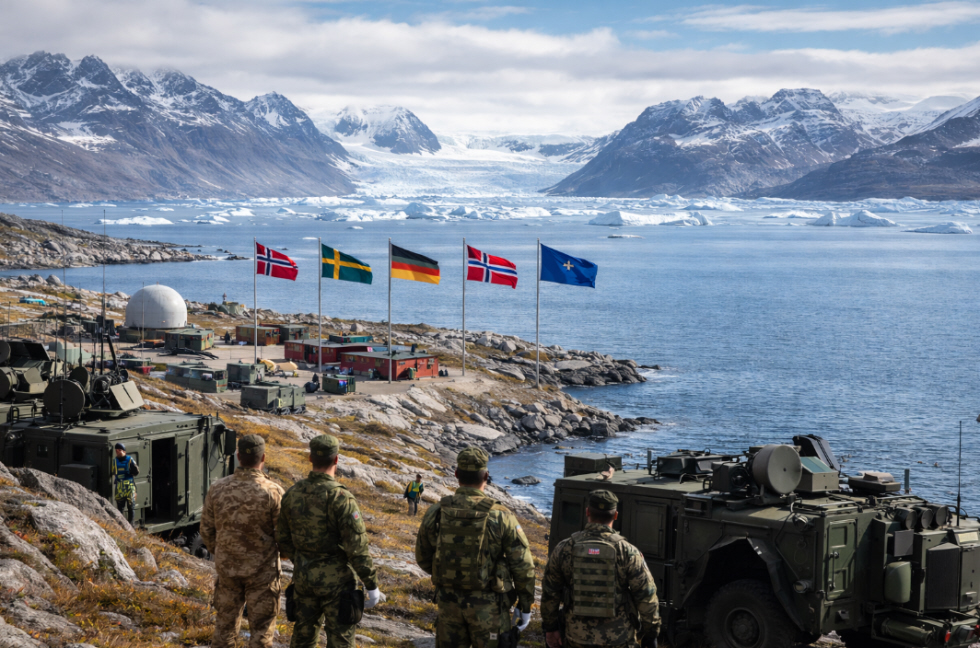
The situation surrounding Greenland has entered a phase of rapid diplomatic and military developments, drawing close attention from both Europe and the United States. In recent days, several European countries have announced the deployment of military personnel to the island, a move officially framed as a measure to strengthen defense cooperation with Denmark amid a complex geopolitical environment. These decisions come against the backdrop of Greenland’s growing strategic importance.
Located at the crossroads of the Arctic, the island plays a key role in regional security, emerging shipping routes, and long-term resource considerations, making it a focal point of interest for transatlantic partners. Denmark confirmed that it requested support from European allies within the NATO framework. As part of that cooperation, Sweden announced that several military officers would arrive in Greenland on Wednesday.
Swedish Prime Minister Ulf Kristersson stated in Stockholm that the deployment was made at Denmark’s request and would initially take the form of joint exercises and operational coordination. Norway also joined the effort. Norwegian Defense Minister Tore Sandvik told Reuters that two defense officers would be sent to Greenland to explore ways to enhance cooperation among NATO allies. The initiative, he said, is focused on information sharing and strengthening regional coordination in the Arctic.
Germany, for its part, confirmed that it will fly its first soldiers to Greenland on Thursday morning. According to a government spokesperson, the initial deployment consists of a “preliminary unit” of 13 reconnaissance soldiers tasked with assessing conditions on the ground and contributing to planning and coordination efforts. The timing of these announcements appears to have been carefully chosen. Around the same time, lawmakers from Denmark and Greenland traveled to Washington to meet with U.S. Vice President JD Vance and Secretary of State Marco Rubio.
The discussions focused on Greenland’s future and on maintaining close diplomatic dialogue amid heightened international attention. Following the meeting, Danish officials described the talks as “good,” while acknowledging that fundamental disagreements remain. Danish Foreign Minister Lars Løkke Rasmussen said at a press conference that those differences could not be resolved at this stage, but emphasized the importance of keeping communication channels open to ensure Greenland’s long-term security within the existing framework.
Journalists in Washington reported that the meeting lasted approximately ninety minutes, underscoring both the sensitivity of the issue and the challenges involved in reaching immediate consensus. Despite the unresolved differences, all sides stressed the need to avoid unnecessary escalation and to preserve regional stability. In the United States, the public reaction to the European troop announcements was notably restrained and symbolic.
The White House shared an AI-generated image depicting two dog sleds, one heading toward the White House and the other toward China and Russia, accompanied by the question, “Which way should Greenland go?” The gesture was widely interpreted as ironic rather than an official policy statement.
Overall, the developments highlight Greenland’s increasing prominence on the global geopolitical stage. As European allies deepen defense coordination and the United States maintains its strategic focus on the Arctic, Greenland’s future remains shaped by diplomacy, alliance management, and the careful balancing of long-term security interests.


