
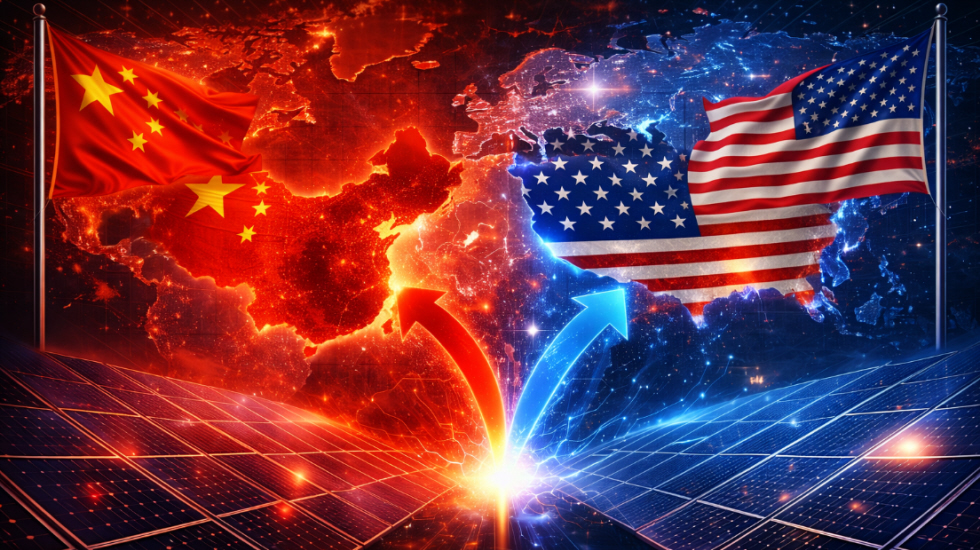
China is reportedly considering restricting exports of advanced solar technology in a move that could reshape the global energy landscape. The potential measure aims to secure its dominance in the production of key renewable energy components. This strategic shift reflects intensifying technological competition. It also signals underlying trade tensions with the United States. The focus of these potential restrictions centers on high-end equipment used in the manufacturing of next-generation solar cells. In particular, heterojunction technology has become a key point of concern.
This type of solar cell offers significantly higher efficiency compared to traditional designs. As a result, control over it is becoming increasingly critical in the global clean energy race. According to industry reports, there is growing concern within China’s solar sector about foreign access to specialized equipment and expertise. China’s current production overcapacity has created opportunities for international buyers. However, it also raises the risk of strategic capability transfer. This concern is beginning to influence policy considerations. U.S.-linked initiatives, including those associated with Elon Musk, are reportedly exploring the development of domestic solar manufacturing capabilities.
This has heightened sensitivity around the export of critical technologies. The possibility that foreign companies could gain a competitive edge is a growing concern among Chinese manufacturers. The situation is increasing pressure on policymakers. The company Tesla has shown interest in expanding beyond electric vehicles into integrated energy solutions. Building solar manufacturing facilities is part of that broader strategy. This would include producing panels and energy storage systems. In this context, access to Chinese technology could prove decisive.
From a geopolitical perspective, any export restriction would have direct implications for global supply chains. China currently dominates a significant portion of the solar industry. Limiting exports could impact pricing, availability, and technological development in other regions. It may also accelerate efforts toward technological independence in Western economies. The debate fits within a broader global trend of tightening control over critical technologies.
Sectors such as semiconductors, artificial intelligence, and renewable energy are increasingly tied to economic security. Decisions in these industries go beyond commercial considerations. They are becoming tools of strategic policy. Overall, the potential move underscores the growing competition between major powers for control over future-defining technologies.
China is seeking to protect its advantage in the solar sector, while the United States aims to strengthen its domestic capabilities. This dynamic balance will shape the future of the global energy transition. And all signs suggest the competition is only just beginning.

