
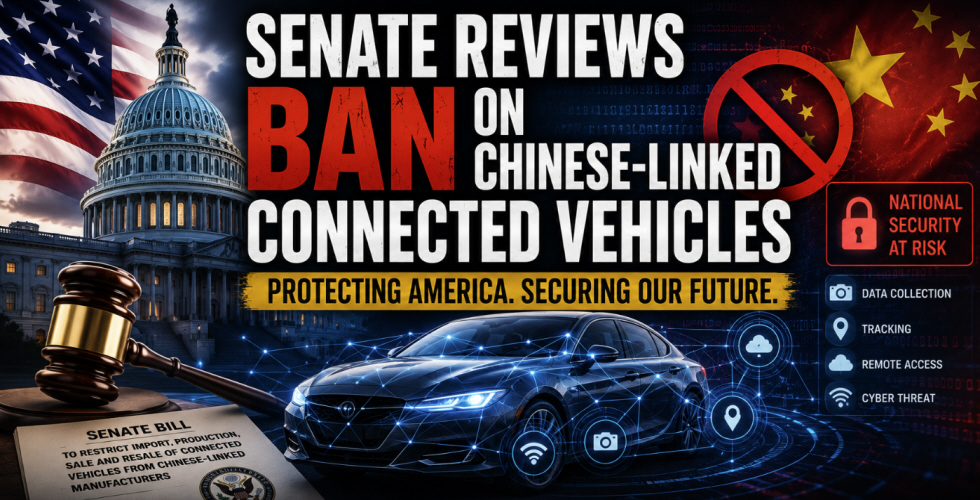
The United States Senate is moving forward with legislation that could significantly reshape the nation's automotive market by restricting the import, production, sale, and resale of connected vehicles manufactured by companies with substantial Chinese ownership. The proposal reflects growing concerns in Washington over technology security and the protection of sensitive national data. The initiative comes amid increasing strategic competition between the United States and China for leadership in industries considered essential to the future economy.
Modern vehicles have evolved far beyond traditional transportation, becoming sophisticated digital platforms capable of collecting, processing, and transmitting vast amounts of information in real time. Lawmakers supporting the proposal argue that connected vehicles could present national security risks if their underlying technology is controlled or influenced by companies with significant ties to foreign governments viewed as strategic competitors. Protecting critical digital infrastructure has become a central priority for U.S. policymakers.
Under the proposed legislation, restrictions would apply to manufacturers in which Chinese shareholders own more than fifteen percent of the company. The goal is to prevent sensitive technologies embedded in smart vehicles from being used to gather valuable information about American citizens, businesses, or critical infrastructure. Particular attention has been focused on advanced navigation systems, cameras, microphones, radar sensors, GPS technology, and permanent internet connectivity found in today's connected vehicles. These components generate continuous streams of data that are essential for autonomous driving features and artificial intelligence systems.
The debate also reflects a broader shift in U.S. industrial policy toward strengthening domestic supply chains and reducing dependence on foreign technology in strategic sectors. In recent years, Washington has introduced several initiatives aimed at reinforcing national capabilities in semiconductors, telecommunications, and advanced transportation technologies. If the proposal ultimately becomes law, many automakers may need to reassess their ownership structures, technology partnerships, and long-term business strategies to maintain access to the U.S. market.
The measure could encourage additional investment in domestic manufacturing while accelerating the development of American automotive technologies. Industry experts believe the legislation could also influence policies beyond the United States. Other countries may consider adopting similar measures to strengthen oversight of connected technologies and protect sensitive digital infrastructure, contributing to a broader global trend toward increased regulation of strategic industries.
At the same time, the proposal has the potential to intensify economic and technological tensions between Washington and Beijing. Restrictions involving connected vehicles would add to ongoing disputes surrounding artificial intelligence, semiconductor manufacturing, telecommunications, and international trade, further expanding the technological rivalry between the world's two largest economies.
Regardless of the bill's final outcome, the debate highlights how closely national security and technological innovation have become intertwined. Decisions made by the U.S. Congress could reshape the future of connected vehicles while influencing the global balance of technological leadership for years to come.


