
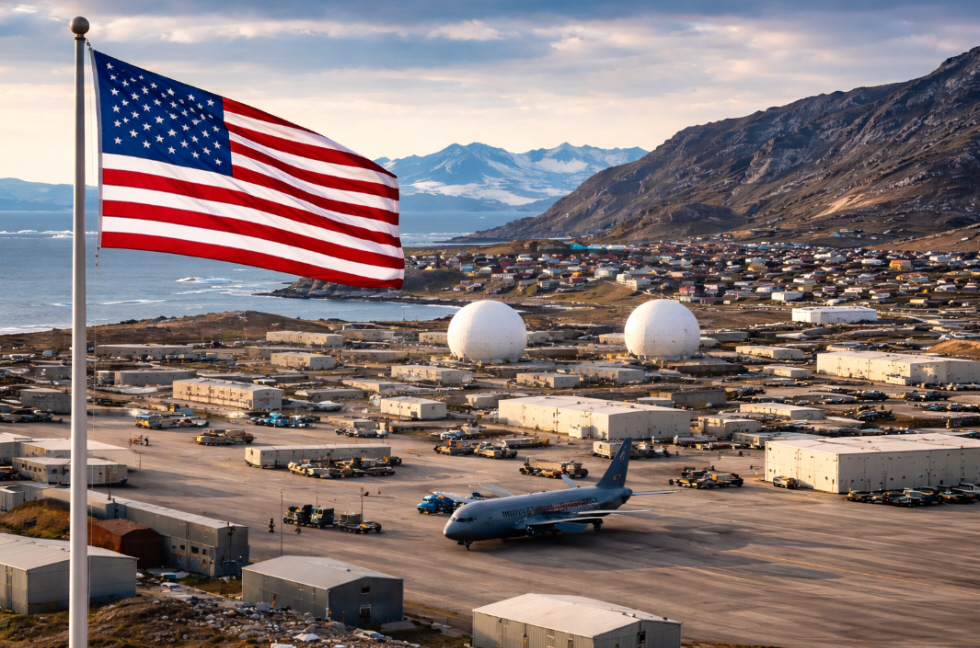
The United States continues to maintain a firm position on Greenland as part of its national security strategy in the Arctic, even after a recent round of diplomatic talks with Denmark and Greenlandic representatives. While the discussions helped preserve open channels of communication, they did not result in a substantive shift in Washington’s strategic assessment of the island.
From the U.S. perspective, Greenland holds a central role in the security balance of the North Atlantic and the Arctic, a region that has gained increasing geopolitical importance in recent years. American officials view the evolving international environment as requiring sustained attention to the territory and its defensive capabilities. Following meetings this week between Vice President JD Vance, Secretary of State Marco Rubio, and Danish and Greenlandic officials, Washington indicated that consultations would continue within a more structured diplomatic framework.
The stated objective is to strengthen cooperation while avoiding unnecessary friction among allies. The U.S. position was reiterated publicly by President Donald Trump, speaking on behalf of the security interests of the United States, as he emphasized that Greenland remains a strategic priority. The statement was framed as an institutional position rather than an immediate or unilateral course of action. One area of ongoing debate involves differing assessments of potential external risks in the region. While the United States has stressed the importance of anticipating strategic moves by major global powers,
Denmark has rejected claims that there is concrete evidence of an immediate military threat, particularly regarding alleged Chinese activity near Greenland. In response, Denmark announced plans to reinforce its military presence in Greenland, including additional personnel, vehicles, drones, vessels, and aircraft. Danish officials also noted that the United States already has military access to the territory and that existing agreements allow for expanded cooperation. The issue has also been discussed within NATO, although the alliance has refrained from taking a formal public position, given that the matter involves two allied countries.
Nevertheless, diplomatic sources suggest that any effort aimed at maintaining stability and coordination in the Arctic is viewed positively within the alliance. As a result of the recent talks, the United States, Denmark, and Greenland agreed to establish a joint working group. This mechanism is intended to address differences through technical and diplomatic channels, reducing the need for public exchanges that could escalate tensions.
Within NATO diplomatic circles, there is a sense of cautious relief. The continuation of dialogue and the willingness to engage collectively have been interpreted as signs that the issue can be managed within established frameworks of alliance cooperation. For now, Greenland’s future remains the subject of strategic and diplomatic deliberation. The United States continues to monitor developments closely, while its allies seek to balance sovereignty, cooperation, and shared security interests in an increasingly complex geopolitical landscape.


