
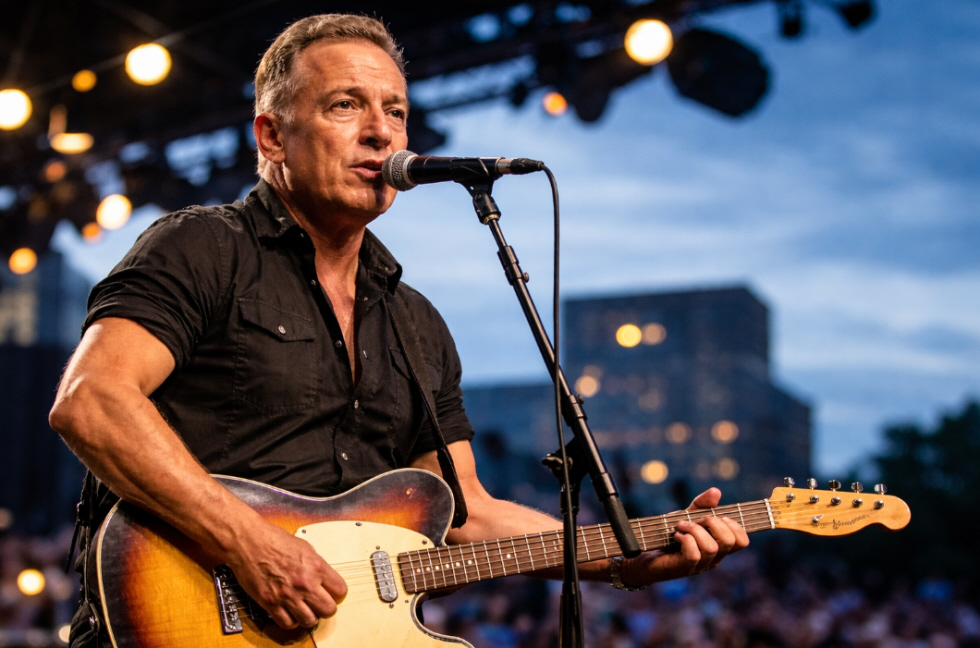
American musician Bruce Springsteen once again spoke out publicly on U.S. immigration policy during a spontaneous appearance in his home state of New Jersey. Addressing his audience, the artist voiced criticism of the actions of U.S. Immigration and Customs Enforcement (ICE) and of policies associated with the administration of President Donald Trump.
At 76 years old, Springsteen used the moment to express concern over federal immigration operations and their impact on American communities. His remarks came amid heightened social tension in several U.S. cities, where protests against immigration enforcement have continued in recent days. During his address, the musician emphasized the importance of respect for the rule of law and civil rights, arguing that no institution should operate beyond legal and constitutional limits.
His comments were met with applause from those in attendance, underscoring the polarized nature of the current immigration debate. Springsteen also dedicated a performance of his song The Promised Land to a U.S. citizen who died during an incident linked to an immigration operation. He described the song as a reflection of the ideals and aspirations traditionally associated with the American dream.
Throughout his career, Springsteen has maintained a record of publicly criticizing government policies he believes conflict with democratic values. In this appearance, he reiterated that the United States is facing a period of profound examination of its foundational principles. His remarks come as demonstrations continue in cities such as Los Angeles, where protesters have voiced opposition to immigration raids. In response, the federal government has deployed National Guard forces and military units to assist with security operations, a move that has generated political debate.
The use of federal forces in domestic protest situations has reignited discussions about the balance between public safety and civil liberties. State and local officials have expressed differing views on the appropriateness and consequences of such measures. Beyond the music itself, Springsteen’s intervention highlights the ongoing role of cultural figures in the U.S. public debate. His comments add to a broader national conversation on immigration, civil rights, and the political direction of the country amid an increasingly polarized climate.


