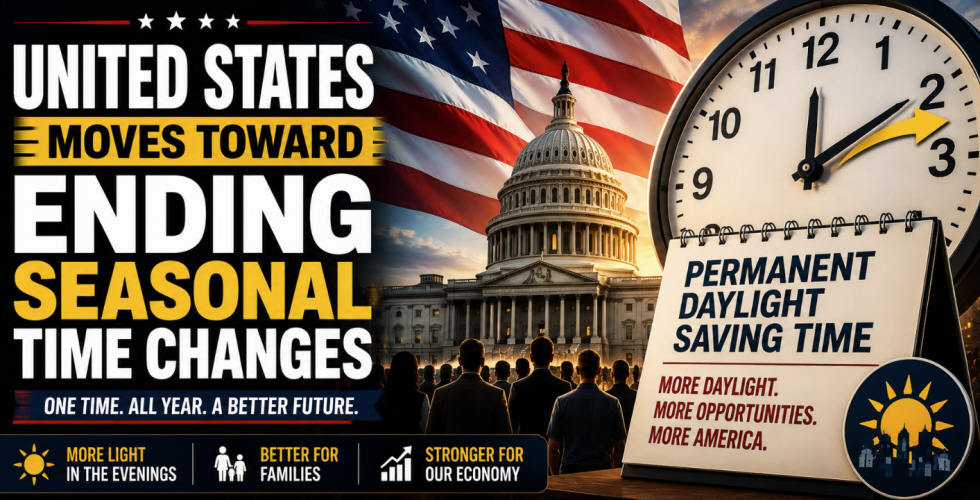
The U.S. House of Representatives has approved legislation that would make Daylight Saving Time permanent, eliminating the need to move clocks forward and backward twice each year. The proposal represents one of the most significant changes to the country's timekeeping system in decades and now heads to the Senate for further consideration. The bill received strong bipartisan support, reflecting growing agreement among lawmakers that the current system has become outdated. Supporters argue that maintaining one consistent schedule throughout the year would provide greater stability for families, businesses, and everyday life.
President Donald Trump has expressed support for the proposal, saying that ending seasonal clock changes would simplify daily routines for millions of Americans. The administration believes a permanent schedule could improve productivity while eliminating the inconvenience associated with changing clocks every spring and fall. Supporters also argue that longer daylight hours during the evening would benefit retailers, tourism, outdoor recreation, and sporting activities. More daylight after work is expected to encourage consumer spending while increasing opportunities for leisure and community events. Another argument in favor of the legislation focuses on public health.
Many experts have suggested that changing the clocks can temporarily disrupt sleep patterns, reduce concentration, and affect overall well-being during the adjustment period each year. Critics, however, warn that permanent Daylight Saving Time could produce much darker winter mornings in many parts of the country. They argue that students, commuters, and early-morning workers could face additional safety concerns before sunrise during the colder months.
The debate over seasonal time changes has existed in the United States for decades. Since its introduction during the 1960s, the system has undergone several modifications as lawmakers sought to balance energy savings, economic activity, and public convenience. During the energy crisis of the 1970s, the nation briefly experimented with year-round Daylight Saving Time.
The program was eventually abandoned after widespread criticism, particularly regarding dark winter mornings and concerns about schoolchildren traveling before daylight. The proposal must now clear its next major hurdle in the Senate, where lawmakers will examine both its economic advantages and its potential social impact. The outcome of that debate will determine whether the United States permanently ends a practice that has existed for more than half a century. If the legislation becomes law, millions of Americans would no longer need to adjust their clocks twice each year, marking the beginning of a new chapter in the nation's daily routine. The decision could have lasting effects on commerce, transportation, education, and everyday life across the country.