
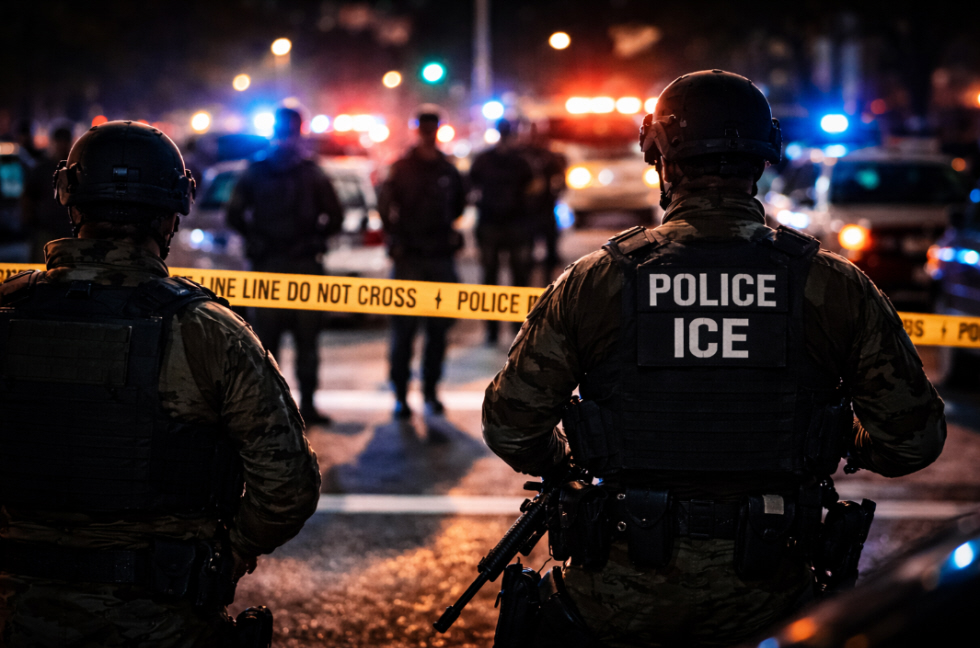
The death of civilian Alex Pretti during a federal operation in Minneapolis has sent shockwaves through the United States, dramatically increasing political and public pressure on Immigration and Customs Enforcement (ICE) and its operational tactics. The incident, which occurred in the context of an immigration enforcement action, immediately sparked public outrage, protests, and renewed scrutiny over the use of force by federal agents.
Since then, the case has become a focal point in the national debate over the limits of such operations. In response to the growing backlash, President Donald Trump’s administration ordered an internal review of the Minnesota operation. As part of that process, the commander in charge was removed from his post, signaling an effort to contain the crisis and address accountability concerns. Beyond the leadership change, a broader operational pullback followed, including the withdrawal of numerous federal personnel involved in the mission, while authorities assessed procedures and examined potential failures in decision-making.
The political impact has extended beyond ICE itself. Pressure has also reached the Department of Homeland Security, where senior leadership is facing mounting questions from lawmakers and critics demanding clearer oversight and stricter control of field operations. The White House has since adopted a more cautious tone, emphasizing the need for a thorough and honest investigation while avoiding unconditional support for the initial accounts released after the shooting. Meanwhile, the investigation remains ongoing, seeking to reconstruct the precise sequence of events surrounding Pretti’s death, including the perceived threat level, the actions taken by agents, and whether the response was proportionate.
The case has reignited long-standing tensions surrounding immigration policy and federal enforcement, particularly in communities where such operations are increasingly viewed with fear and distrust. For civil rights advocates and community leaders, Pretti’s death underscores the risks associated with high-intensity federal actions in urban environments and has renewed calls for a comprehensive review of protocols and oversight mechanisms.
In an already polarized political climate, the killing of Alex Pretti has become a symbol of a broader national reckoning over authority, accountability, and the use of force by the state—one that is likely to remain unresolved until the investigation concludes and potential institutional consequences emerge.


