
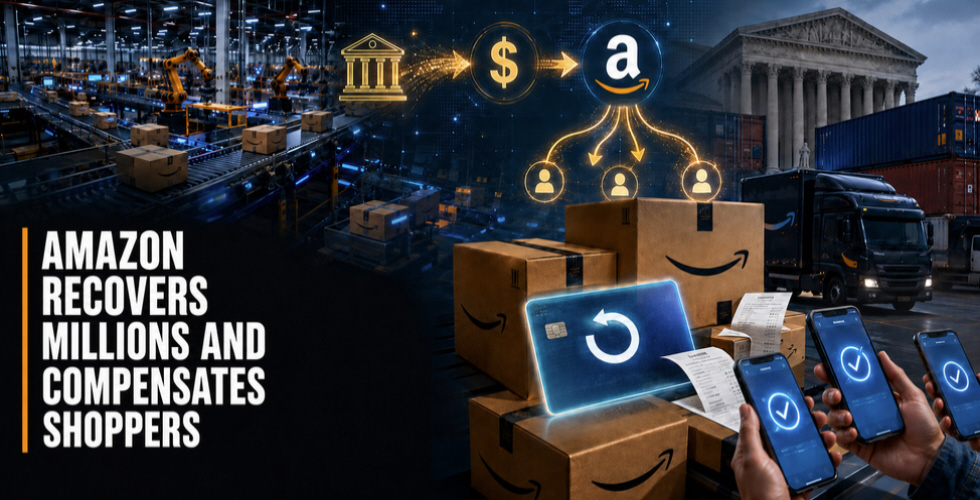
Amazon received approximately $600 million in refunds related to tariffs imposed during Donald Trump’s administration. The company confirmed that the money arrived during the second quarter of 2026. The payments are part of a federal refund process that began after the Supreme Court invalidated a significant portion of those trade measures. The decision has opened a new debate over who should ultimately benefit from the recovered funds. The nation’s highest court determined that the emergency legislation invoked by the administration did not authorize the broad imposition of those tariffs.
Numerous companies subsequently began seeking reimbursement for duties paid while the measures were in effect. Amazon participated in that process and recovered a substantial amount of money. The case demonstrates the enormous financial scale of the United States tariff policy. The company announced that part of the money will be returned directly to certain customers. However, refunds will be limited to orders where a specific tariff charge can be identified. Amazon must determine that the additional cost was directly incorporated into the price paid by the customer.
Not every shopper who purchased products during that period will meet the required conditions. Eligible customers would not need to complete forms or submit individual claims. Amazon plans to identify them by reviewing the information contained in its sales records. The company would then contact each person and automatically process the corresponding refund. No public date has been announced for the beginning of those payments. Amazon has not disclosed how many customers could receive money or the average amount of each payment. The value will depend on the product purchased and the tariff charge that can be verified within the transaction.
In some cases, the refund could be relatively small compared with the total value of the order. The lack of detailed information continues to raise questions among consumers. The company maintains that it absorbed much of the cost created by the tariffs instead of passing it entirely through higher prices. Amazon also accumulated inventory before the new duties took effect to reduce their financial impact. This strategy allowed numerous products to remain available without immediate price increases. Amazon therefore expects only a limited portion of its sales to generate direct customer compensation.
Another important factor is the role of independent merchants operating on the platform. Amazon was not the official importer of record for most products sold by third-party vendors. In those situations, tariff obligations may have fallen on manufacturers, distributors, or outside merchants. This complicated supply chain makes it difficult to determine exactly who originally paid each duty. Money that cannot be connected to specific purchases will not be distributed generally among all Amazon users. The company says those funds will be used to continue investing in lower prices and reducing costs for customers.
Amazon believes that this approach will provide a broader long-term benefit. Critics may demand greater transparency regarding the final destination of the recovered money. The refund also renews the debate over whether tariffs were actually paid by corporations or passed along to consumers. Although importers formally pay the duties, their effects can later appear through prices, fees, and distribution expenses.
Determining who deserves the reimbursement is therefore more complicated than it initially appears. Amazon’s decision could establish an important example for other major American companies. Recovering $600 million represents a significant financial victory for the e-commerce giant.
At the same time, it places Amazon under pressure to explain how affected shoppers will be identified and compensated. Future disclosures should reveal what proportion of the money will reach consumers directly. The controversy is only beginning and could transform how companies manage future tariff refunds.