
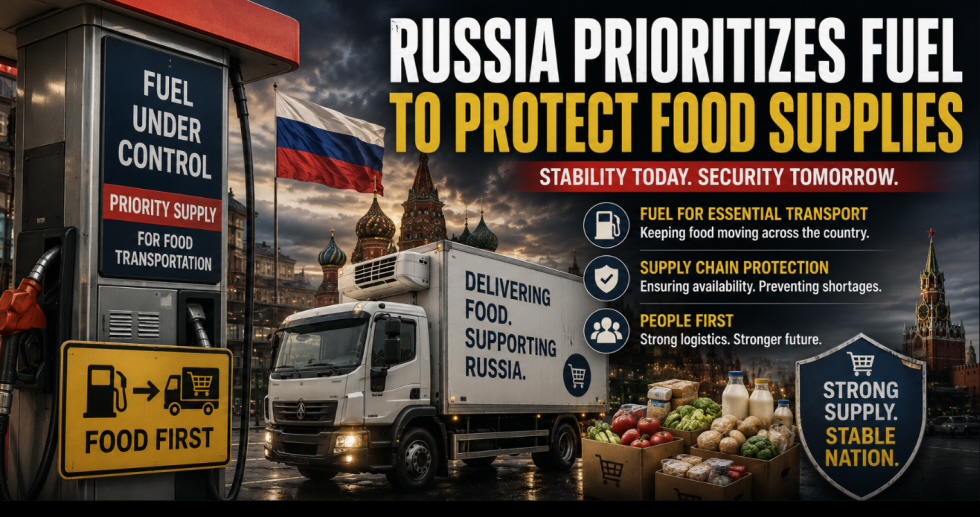
Russia has introduced new measures to tighten fuel distribution across several regions of the country, placing greater priority on services considered essential to the national economy. Among the government's main objectives is ensuring a stable supply of gasoline and diesel for vehicles responsible for transporting food to supermarkets, distribution centers, and local markets. The decision comes as authorities respond to increasing pressure on domestic fuel supplies, prompting a broader effort to manage available energy resources more efficiently. Officials aim to prevent disruptions that could affect the movement of essential goods and create shortages in key sectors.
Food transportation has become one of the government's highest priorities because any interruption in deliveries could lead to temporary shortages and higher prices for basic consumer products. Maintaining uninterrupted logistics is viewed as essential to preserving stability across the country's internal market. The new restrictions may also affect other industries that rely heavily on daily fuel consumption. Freight companies, independent transport operators, and small businesses could face tighter access to fuel while the government redirects supplies toward critical services.
Economic analysts note that fuel availability has become one of Russia's most significant domestic challenges, particularly as demand remains high across transportation and industrial sectors. Careful management of energy resources is expected to play an increasingly important role in maintaining economic activity. The stronger distribution controls reflect the government's intention to improve resource management while reducing the risk of interruptions in strategically important industries. Prioritizing food logistics is intended to help preserve market stability and protect consumers from supply disruptions.
Companies responsible for delivering food products will now be expected to coordinate their operations under the new fuel allocation system. Authorities hope these measures will guarantee that essential goods continue reaching stores and distribution centers without major delays. Consumers are also closely following developments, recognizing that prolonged fuel shortages could directly influence transportation costs and eventually lead to higher prices for groceries and other everyday necessities.
The stability of supply chains remains a growing public concern. Many experts believe the latest measures highlight the increasing importance of energy security as a cornerstone of national economic resilience. Reliable fuel supplies remain essential for supporting logistics networks, industrial production, and the uninterrupted distribution of essential goods.
Although Russian authorities remain confident that the new priorities will help reduce the effects of fuel shortages, the domestic energy market will continue to be monitored closely in the coming weeks. Maintaining stable fuel supplies will be crucial for protecting food distribution, limiting inflationary pressures, and supporting overall economic stability.

