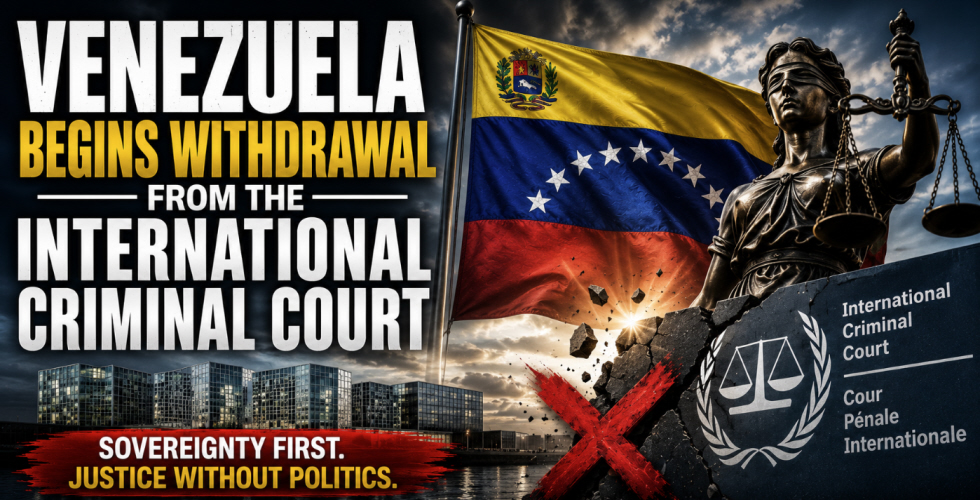
The Venezuelan government has officially announced the beginning of the process to withdraw from the International Criminal Court, marking a significant development in the country's relationship with international justice institutions. The decision reflects a critical stance toward the court's role and opens a broad discussion about its political and legal implications. Government officials argue that the decision is a response to what they describe as unequal treatment by the court based in The Hague.
According to the administration, the tribunal has acted in a manner that has damaged Venezuela's image and has been used as a mechanism for political pressure. By taking this step, Venezuela has activated the withdrawal procedure established under the Rome Statute, the treaty that created the International Criminal Court. Although the announcement represents a major policy decision, the withdrawal will not take effect immediately and must follow the timetable established by the treaty.
International law experts note that leaving the court does not automatically end legal proceedings involving events that occurred while the country remained a member of the Rome Statute. As a result, investigations already underway may continue under the applicable legal framework. The announcement also carries important diplomatic implications, as it is expected to generate reactions from governments, multilateral organizations, and human rights advocates.
The international community is likely to monitor the process closely in the months ahead. Venezuelan authorities maintain that national sovereignty should take precedence over any international mechanism that, in their view, interferes in the country's internal affairs. This position has been consistently expressed by senior government officials in recent years. The withdrawal could also influence Venezuela's relations with several international institutions and affect diplomatic dialogue with countries that strongly support the work of the International Criminal Court. Analysts believe the overall impact will depend on how the international community responds.
The decision has also revived the broader debate over the role of international courts in protecting human rights and prosecuting crimes of international concern. While many governments view the court as an essential pillar of global justice, others continue to question the scope of its jurisdiction and the impartiality of some of its actions.
Across Latin America, Venezuela's decision is expected to become an important topic of discussion among regional governments, many of which remain active members of the International Criminal Court. Legal scholars and international observers will continue following the process with close attention.
With the formal withdrawal procedure now underway, Venezuela enters a new phase in its foreign policy and its relationship with international justice. The outcome of the process and its diplomatic consequences will play an important role in shaping the country's position within the international community in the years ahead.